Informatics and Digital Health
Key responsibilities include:
Optimising electronic prescribing and medicines administration systems (EPMA) to improve safety, accuracy, and workflow efficiency.
Designing and maintaining clinical decision-support tools, such as alerts, dose calculators, guidelines, and safety warnings.
Supporting digital transformation projects, including system upgrades, new software implementation, and digital workflow redesign.
Analysing medicines-related data to identify trends, risks, errors, and opportunities for quality improvement.
Training and supporting healthcare staff on the use of digital systems, ensuring safe and confident adoption.
Ensuring digital medicines processes meet safety, governance, and regulatory standards, including clinical risk assessments.
Collaborating with IT teams, developers, and clinical groups to ensure digital systems align with real-world clinical practice and pharmacy workflows.
Informatics and digital health pharmacists play a crucial role at the intersection of pharmacy, technology, and healthcare innovation. Their work focuses on designing, implementing, and optimising digital systems that support safe and effective medicines use such as electronic prescribing, clinical decision-support tools, automation, and data-driven improvements. These pharmacists help ensure that digital health solutions reflect real clinical workflows and support best practice.
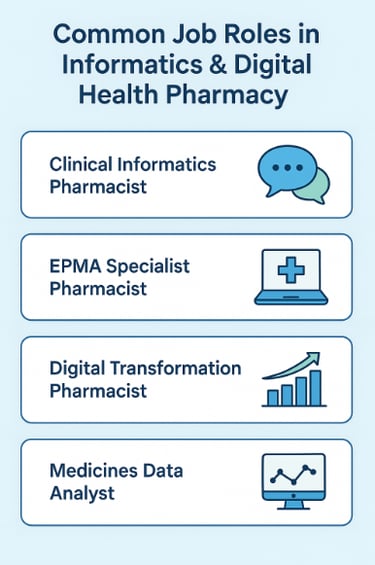
Informatics pharmacists sit at the intersection of technology and clinical practice. They help design digital workflows, optimise prescribing systems, troubleshoot EPMA issues, support medicines data quality, and ensure digital tools align with clinical guidelines. They also liaise with IT teams, software developers, administrators, and clinical staff to improve safety and efficiency across the medicines-use process.
Digital health pharmacists may also work in national organisations such as NHS England, NHS Digital, MHRA, or digital start-ups developing decision-support platforms, prescribing apps, AI tools, automation systems, or advanced analytics dashboards.
Many pharmacists complete additional qualifications in health informatics, data science, health IT, AI in healthcare, project management, Lean/Quality Improvement, or digital transformation. Professional bodies increasingly offer structured frameworks for informatics careers, including the Faculty of Clinical Informatics (FCI) membership pathways.
Leadership & Strategy Route
For pharmacists who enjoy digital transformation, project oversight, and organisational strategy, common roles include:
Chief Digital Pharmacist
Digital Transformation Lead
EPMA Programme Manager
Head of Clinical Informatics
NHS England Digital Medicines Lead
These roles focus on system-wide rollouts, digital optimisation strategies, governance, and organisational leadership.
Technical / Specialist Route
For pharmacists who enjoy hands-on system development, data work, and technical problem-solving:
EPMA Specialist Pharmacist
Clinical Informatics Pharmacist
Medicines Data Analyst
Digital Clinical Safety Officer
AI / Decision-Support Pharmacist
Systems Integration or Workflow Specialist
These roles involve coding logic for decision-support tools, analysing medicines data, configuring EHR systems, and improving prescribing workflows.