Industry (Pharmaceutical Industry)
A pharmacist in the pharmaceutical industry applies their scientific and clinical expertise to the development, regulation, manufacturing, and safe use of medicines. Typically, instead of working directly with patients, they contribute to the research, quality, and oversight behind medicines used worldwide. Their work helps ensure that new treatments are effective, safe, and meet strict regulatory standards.
Key responsibilities include:
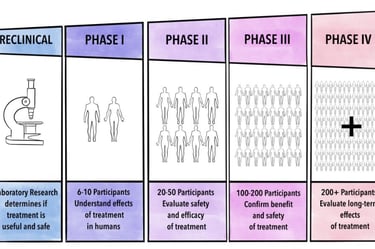
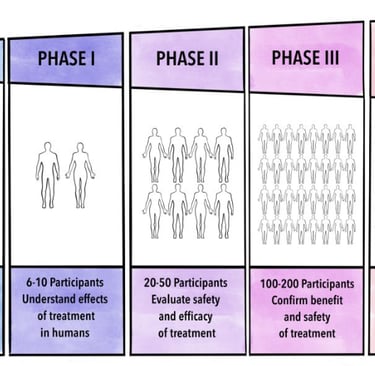
Supports drug research and development, including formulation, clinical trials, and evidence generation.
Ensures medicines meet regulatory requirements, working with bodies like the MHRA or EMA.
Maintains drug safety through pharmacovigilance, monitoring side effects and reporting risks.
Provides medical and scientific information to healthcare professionals and internal teams.
Works in quality assurance (QA) and quality control (QC) to ensure products are safe and compliant.
Supports market access and health economics, helping new medicines reach patients.
Acts as a Medical Science Liaison (MSL) to communicate clinical data and support clinicians using new treatments.
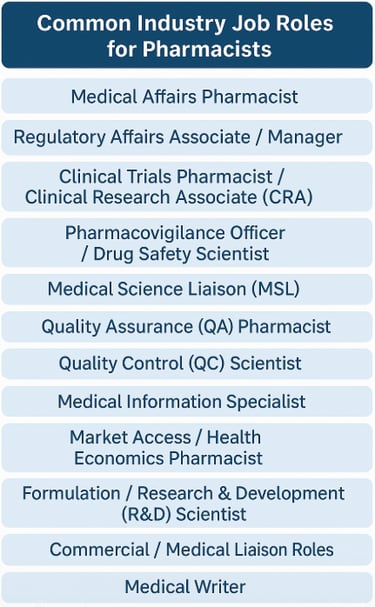
Industry pharmacy roles are incredibly diverse. Pharmacists may work in regulatory affairs, ensuring medicines meet global quality and safety standards; medical affairs, providing scientific expertise to healthcare professionals; pharmacovigilance, monitoring medicine safety post-launch; research and development, contributing to clinical trials, formulation science, or drug delivery systems; or quality assurance and manufacturing, ensuring products are safe, compliant, and consistent.
What makes industry unique is its global perspective: many pharmacists collaborate with international teams, regulatory bodies, and research centres. The work often combines scientific expertise with communication, project management, and strategic thinking. Industry roles can be office-based, lab-based, or field-based, depending on the area of specialisation.
Career development in industry is highly structured, offering pathways from junior specialist roles to senior leadership. Pharmacists may also complete postgraduate qualifications such as the Postgraduate Diploma in Pharmaceutical Medicine, QPPV training, clinical research certifications, or MBA programmes for those preparing for leadership.
Management & Leadership Route
Pharmacists who enjoy team leadership, strategy, and cross-functional collaboration can progress to roles such as:
Regulatory Affairs Manager / Senior Manager
Medical Affairs Lead / Medical Manager
Quality Assurance Manager
Head of Pharmacovigilance / QPPV
Commercial or Market Access Lead
Director / VP of Medical or Regulatory Affairs
These roles involve leading teams, shaping company strategy, managing portfolios, and overseeing high-risk operations.
Scientific / Technical Advanced Route
Pharmacists who prefer deep scientific expertise can advance into:
Clinical Scientist / Clinical Trials Lead
Formulation or R&D Scientist
Senior Pharmacovigilance Scientist
Regulatory Affairs Specialist (Advanced)
Medical Advisor or Scientific Lead
Manufacturing Scientist / GMP Specialist
These roles require high-level analysis, scientific leadership, and often involve global research programmes or advanced therapy pipelines.