
A hospital pharmacist is a clinical medicines expert who works within the hospital team to ensure patients receive safe, effective, and appropriate treatment. They review medication charts, advise doctors and nurses, support patient care on the wards, and help make sure medicines are used correctly from admission to discharge. They play a key role in optimising therapy, preventing errors, and improving patient outcomes.
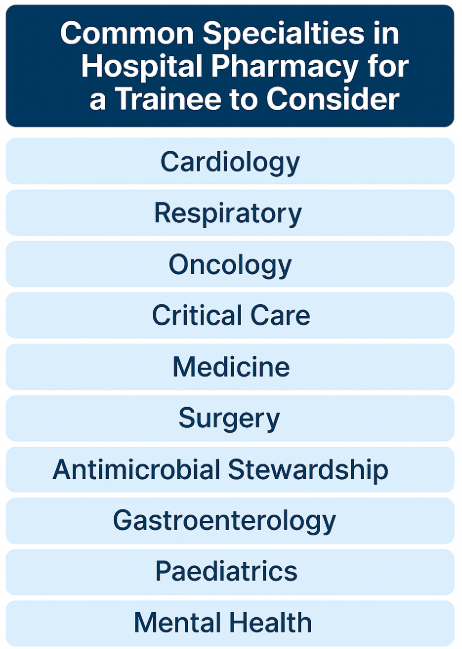
There are several areas in which you can specialise in so begin to think about what really interests you. Some examples include:
Key responsibilities include:
Rotates through different clinical specialties (e.g., surgery, medicine, cardiology, admissions).
Reviews inpatient medications for safety, accuracy, interactions, and dosing.
Takes medication histories and performs medicines reconciliation.
Counsels patients on new or changed medicines before discharge.
Supports safe and timely discharge planning
Attends ward rounds or multidisciplinary meetings (depending on rotation).
Participates in clinical audits and quality improvement projects.
Supervises trainee pharmacists, students, and junior staff under guidance.
Hospital Pharmacy (NHS or Private Sector)
Career Development and Specialisation
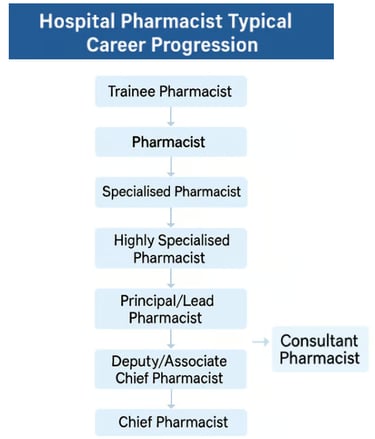
Career progression in hospital pharmacy is structured yet highly flexible. After gaining core experience, pharmacists can move into band 7 and 8 roles, which may include:
Clinical specialties such as cardiology, oncology, paediatrics, critical care, renal medicine, or mental health.
Technical services including aseptic production or medicines procurement.
Education and training, helping develop students and trainee pharmacists.
Pharmacy management and leadership, overseeing teams, governance, and service development.
Many hospital pharmacists pursue postgraduate qualifications, such as clinical diplomas, independent prescribing qualifications, or advanced clinical practice training. Independent prescribing, in particular, empowers pharmacists to manage clinics, adjust treatment plans, and take a more proactive role in patient care.
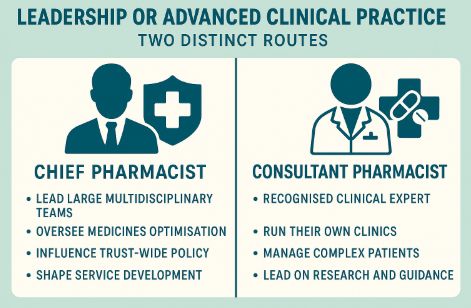
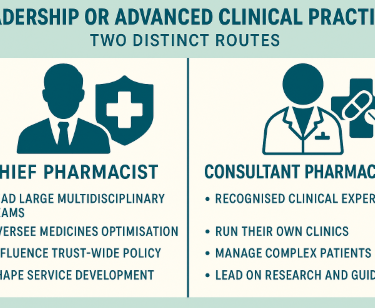
As you progress through hospital pharmacy, you’ll find two clear but equally valuable career pathways: management and advanced clinical practice. If you’re drawn to leadership, service development, and shaping the strategic direction of pharmacy services, you can work your way toward becoming a Chief Pharmacist. Chief Pharmacists are responsible for leading large multidisciplinary teams, overseeing medicines optimisation across the organisation, and influencing trust-wide policy and governance. This route suits individuals who enjoy problem-solving at a systems level and playing a central role in how services evolve.
On the other hand, if your passion lies in staying close to patient care and deepening your clinical expertise, you can pursue the route of becoming a Consultant Pharmacist. Consultant Pharmacists are recognised clinical experts in their specialty such as critical care, cardiology, or infectious diseases. They often run their own clinics, manage complex patients, lead on research, and shape national guidance. This pathway is ideal for those who want to remain fully embedded in clinical practice, take responsibility for high-level decision-making, and contribute to the evidence base underpinning modern therapeutics