GP Pharmacy
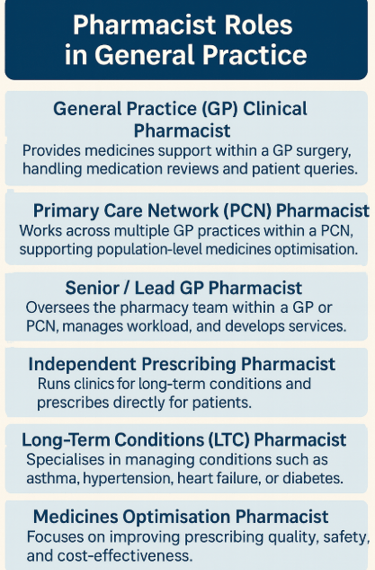
A GP pharmacist works within a General Practice or Primary Care Network to support GPs, nurses, and other primary care staff in managing medicines safely and effectively. Their role focuses on long-term condition management, structured medication reviews, and providing expert medicines support directly to patients.
Key responsibilities include:
Conducts Structured Medication Reviews (SMRs) for patients with long-term conditions.
Manages chronic diseases (e.g., hypertension, asthma, diabetes) — often running their own clinics.
Supports medication optimisation, deprescribing, and polypharmacy management.
Reviews high-risk medications and monitoring requirements.
Handles medicines-related queries from GPs, nurses, and patients.
Supports repeat prescription management and resolves prescription issues.
Provides patient counselling on new or changed medicines.
Because primary care prioritises continuity, GP pharmacists often work with the same patients long-term. This allows for relationship-building and a deep understanding of patients’ medical histories, social backgrounds, and ongoing needs. With NHS England’s focus on expanding the role of pharmacists in primary care, there are increasing opportunities for advanced practice and prescribing.
GP pharmacy also offers a high degree of flexibility, with opportunities to work part-time, full-time, or in portfolio roles combining other sectors such as hospital, community, academia, or teaching.
As in other sectors, GP pharmacists can pursue two broad pathways:
Management / Leadership Route
Pharmacists with an interest in leadership, service design, and strategic development can progress into roles such as:
PCN Pharmacy Lead
Senior Clinical Pharmacist
Head of Medicines Management
ICB Medicines Optimisation Lead
These roles involve overseeing teams of pharmacists and pharmacy technicians, shaping clinical pathways, leading QI projects, and influencing local prescribing policy.
Advanced Clinical Practice Route
Pharmacists who prefer hands-on clinical work can pursue:
Independent Prescriber (IP) roles
Advanced Clinical Practitioner (ACP)
Consultant Pharmacist in Primary Care
These clinicians run clinics (e.g., hypertension, asthma, diabetes, pain management), diagnose and prescribe, manage complex patients, and contribute to research, audits, and guideline development.